The CABM Electrical Physiology and Pharmacology of Ion Channels Program
please excuse AI generated logo - I failed Graphic Design at GCSE.
It has a typo in ‘electrical’ which is a nice reminder that the robots can’t replace us yet
also, I named this before I remembered that ‘electrophysiology’ is one word
The EPPIC Program is intended to provide the Rutgers research community with expertise and technical assistance for the study of ion channel function and cellular electrophysiology. We have a long-standing interest in ion channel structure, function, and pharmacology, with previous work focusing on a wide variety of channels, including K2P, calcium-activated, and ATP-sensitive potassium channels, TRP channels, calcium-activated chloride channels, and mechanosensitive ion channels. Through collaborations with colleagues across Rutgers, we contribute to the design and implementation of multiple approaches, including patch clamp electrophysiology, physiology studies in animal models of disease, and establishing a range of biochemical assays to measure electrophysiological behavior. As part of this program, we also seek to build links with external electrophysiology experts and to present the work at Rutgers to the wider community.
Contact us if you are interested in ion channel studies and need a hand!
Within the McClenaghan lab we have two electrophysiology set-ups with fluorescence microscopes allowing for independent or simultaneous patch clamp and fluorescent indicator experiments, two-electrode voltage clamp apparatus for those stubborn to express channels, and rodent ECG and hemodynamic recording equipment. In addition, we have access to plate readers with integrated liquid handling and we are developing methods for high-throughput mutagenesis screening. With these facilities we can make patch clamp and sharp electrode recordings of recombinant channels in heterologous systems or in isolated native cells, as well as conduct a range of fluorescent indicator assays for calcium, potassium, chloride or non-selective channels. Equipment is available for collaborators to use and training in techniques can be offered when needed. We also support collaborators with assay design, generation of preliminary data, and analysis.
Collaborative studies:
Identification of novel gene expression programs in thrombin-stimulated hepatic stellate cells. Mac NA, Prasad S, Capece GE, Martínez-Zamudio RI, McClenaghan C, Poole LG. Res Pract Thromb Haemost. 2025 Oct 13;9(7):103223. doi: 10.1016/j.rpth.2025.103223.
Live-cell quantification reveals viscoelastic regulation of synapsin condensates by α-synuclein. Wang H, Hoffmann C, Tromm JV, Su X, Elliott J, Wang H, Deng M, McClenaghan C, Baum J, Pang ZP, Milovanovic D, Shi Z. Sci Adv. 2025 Apr 18;11(16):eads7627. doi: 10.1126/sciadv.ads7627.
Volume-Regulated Anion Channel Complex Modulates Mechano-Electrical Signal Responses in Human Airway Smooth Muscle Shortening. Woo J, Cao G, Karmacharya N, Lee J, Lee J, Duru KC, McClenaghan C, An SS, Panettieri RA Jr, Jude JA. Am J Respir Cell Mol Biol. 2025 Apr;72(4):418-428. doi: 10.1165/rcmb.2024-0160OC.
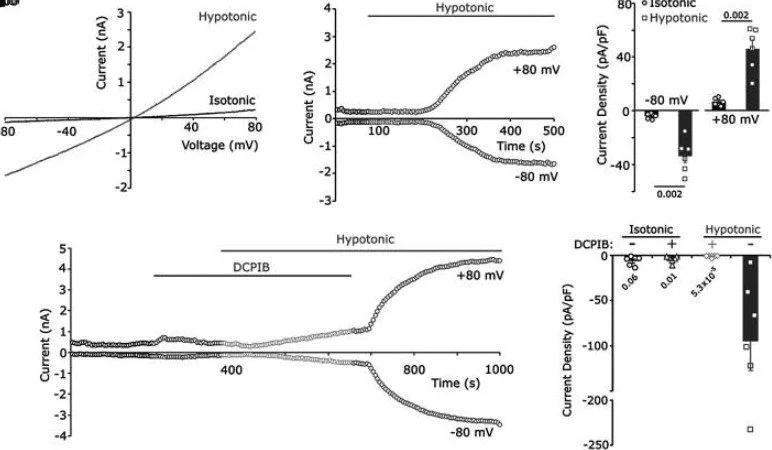
VRAC currents recorded from human airway smooth muscle cells - Woo et al., 2025
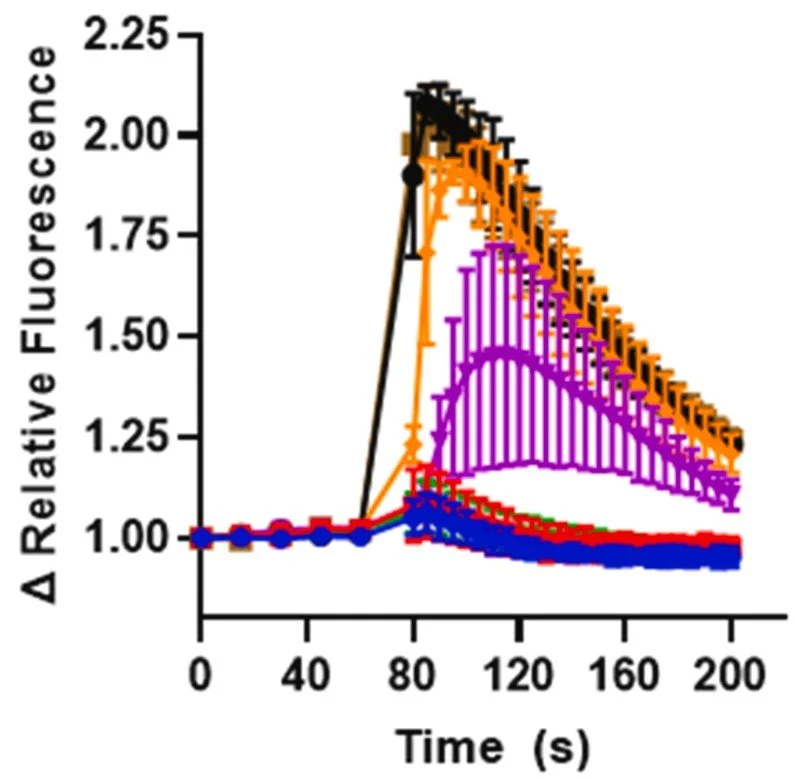
Thrombin mediated calcium elevations in human hepatic stellate cells. Recordings made by N. Mac (Lauren Poole, lab) - Mac et al., 2025